
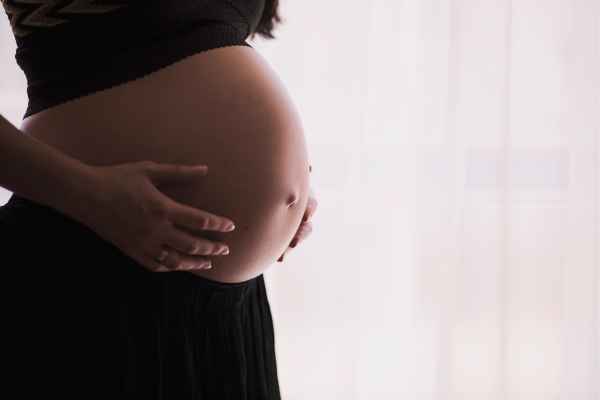
Diastasis Recti West Midlands is a condition many women suffer from either while pregnant or after childbirth. It occurs when the two sides of your abdominal muscles (also called the ‘six-pack’ muscles) slowly separate as your belly grows.
During pregnancy, your body naturally releases hormones like relaxin and oestrogen, which help your tissues become more flexible as your baby grows. At the same time, your expanding uterus gently pushes against your abdominal wall.
Over time, this combination can stretch the connective tissue in the middle (the linea alba), which may lead to a visible gap between your abdominal muscles.
It’s not a flaw or something you’ve done wrong—it’s simply your body making room for your baby. However, how that separation is managed can make a big difference in your recovery later on.
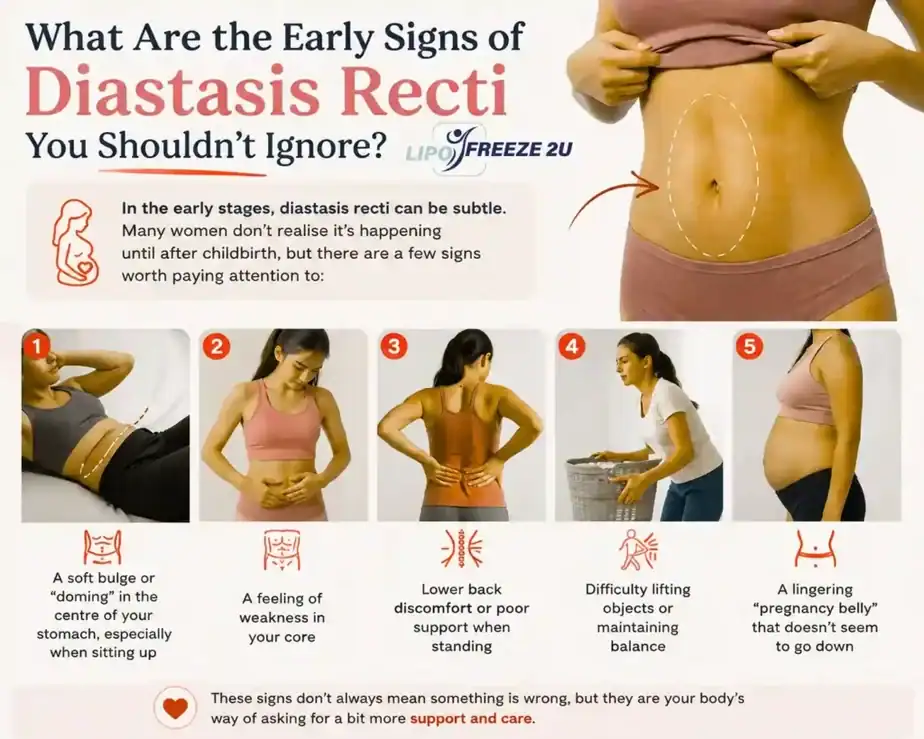
What Are the Early Signs of Diastasis Recti You Shouldn’t Ignore?
In the early stages, diastasis recti can be subtle. Many women don’t realise it’s happening until after childbirth, but there are a few signs worth paying attention to:
See The 10 Benefits of Body Toning for Diastasis Recti West Midlands
- A soft bulge or “doming” in the centre of your stomach, especially when sitting up
- A feeling of weakness in your core
- Lower back discomfort or poor support when standing.
- Difficulty lifting objects or maintaining balance
- A lingering “pregnancy belly” that doesn’t seem to go down
These signs don’t always mean something is wrong, but they are your body’s way of asking for a bit more support and care.
Why Are Some Women More Likely to Develop Diastasis Recti West Midlands?
Not every pregnancy leads to noticeable abdominal separation, but there are a few things that can make it more likely:
- Carrying more than one baby (sometimes twins or multiples)
- Having pregnancies close together without much recovery time in between
- Starting pregnancy with a weaker or less supported core
- Gaining weight quite quickly during pregnancy
- Not being mindful of posture or core support in everyday movements.
Genetics can play a part, too, so some women naturally have connective tissue that stretches more easily than others. Get Your Dream Body with Non-Invasive Fat Freezing
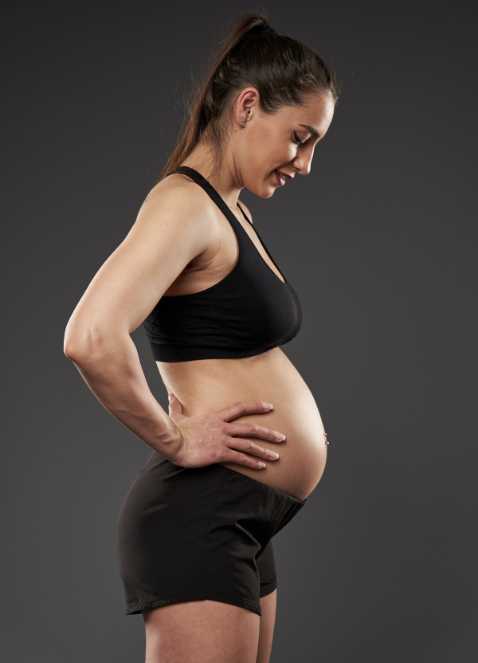
Can You Actually Prevent Diastasis Recti During Pregnancy West Midlands?
Prevention isn’t always guaranteed, but you can take steps to ease the strain and better support your body along the way.
Try to think of it less as “preventing” and more as protecting your core as it changes. Small, steady habits really do add up:
- Focus on gentle, controlled core engagement instead of pushing into intense ab workouts.
- Avoid any movements that make your stomach push or bulge outward.
- Pay attention to your posture when you’re sitting, standing, or even lying down.
- Roll onto your side before getting out of bed, rather than sitting straight up.
- Wear supportive clothing if it feels helpful or has been recommended.
It’s really about working with your body as it adapts, rather than pushing it too far.
What Exercises Are Safe (and Unsafe) for Your Core During Pregnancy?
Exercise is important during pregnancy, but the type of movement matters.
Safe and supportive exercises:
- Pelvic tilts
- Deep core breathing (diaphragmatic breathing)
- Planks with assistance (knees or elevated surface)
- Prenatal yoga or Pilates (under supervision). See here: What Exercises Help Close Diastasis Recti (And What to Avoid)
Exercises to avoid or modify:
- Crunches—or sit-ups—traditional exercises, the kind just heavy times –have created a lot of pressure on your core.
- Extreme twisting that could put pressure on your abs.
- Lifting in the wrong way, without or without from the core.
- Planks and any other exercises that create high pressure in the abdomen should be modified.
If you can see your stomach pushing out rather than pulling in while doing an exercise, know to stop or scale back.
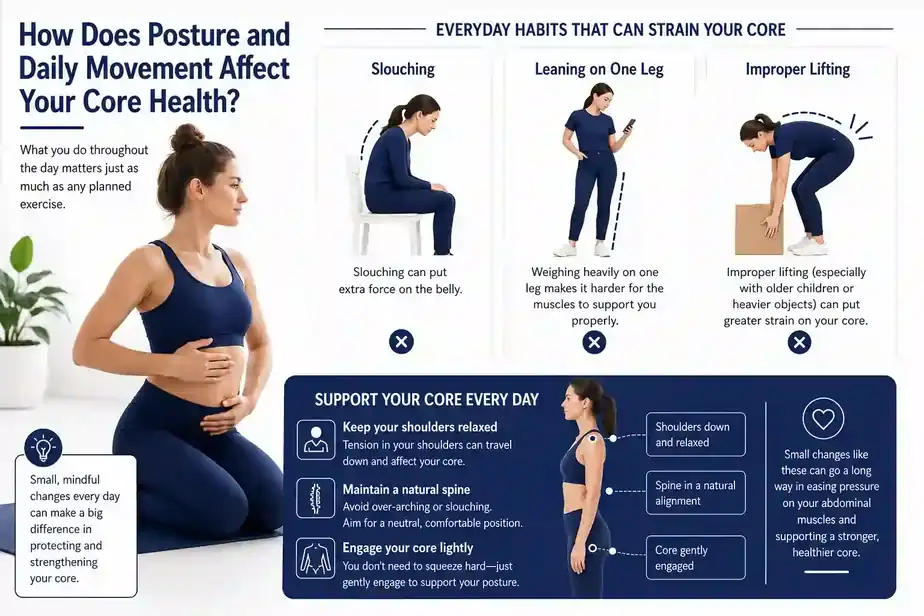
How Does Posture and Daily Movement Affect Your Core Health?
What you do throughout the day matters just as much as any planned exercise.
Simple, everyday habits can either support your core or quietly put more strain on it:
- According to Medical Healthline, straining or contracting your abdominal muscles can cause a bulge in your stomach, which is a common symptom of diastasis recti.
- Everyday habits such as slouching or standing unevenly may contribute to this issue by putting extra pressure on your core.
- Improper lifting (especially with older children or heavier objects) can put greater strain on your core.
Try to stay aware of how you hold yourself, keep your shoulders relaxed, your spine in a natural position, and your core lightly engaged. Small changes like these can go a long way in easing pressure on your abdominal muscles.
What Should You Do If You Think You Have Diastasis Recti?
What you do throughout the day matters just as much as structured exercise.
This condition is super common, and in many cases, it improves with the right care. How to Overcome Erectile Dysfunction: Safe and Effective Solutions. Also Read It
Here’s what you can do:
- Avoid high-pressure core exercises.
- Start gentle core rehabilitation exercises.
- See a women’s health physio.
- Assess it to learn how bad it is.
The sooner you address it, the easier and more effective it will be to improve.

How Can LIPO FREEZE 2U Support Your Post-Pregnancy Body Recovery?
After pregnancy, many women want to feel stronger, more comfortable, and more confident in their bodies again.
LIPO FREEZE 2U West Midlands offers non-surgical treatments designed to support body contouring and recovery. While these treatments don’t “cure” diastasis recti West Midlands, they can help improve the appearance of the abdominal area and target stubborn fat that doesn’t respond to diet and exercise.
One of the biggest advantages is how convenient it is—treatments can be carried out in your own home, so you can fit them around your routine without adding extra stress to your day.
When combined with proper core rehabilitation and healthy habits, it can be part of a broader approach to feeling like yourself again.
FAQs : What Is Diastasis Recti and Why Does It Happen During Pregnancy?
Q: I still look pregnant months after giving birth—why hasn’t my stomach gone down, and could this be diastasis recti West Midlands?
This is very common after pregnancy. A lingering belly can be due to abdominal muscle separation rather than fat. Focusing on gentle core recovery exercises can help improve the shape over time.
Q: I have a newborn and no time to spend an hour working out every day. How can I improve my core and recovery?
Realistically, neither do most new mums—and that’s perfectly fine. It could be a few minutes here or there doing simple core exercises and getting your body back to normal again, as far as feeling strong.
Q: I’m worried I’ve done something wrong during pregnancy—could I have prevented this from happening?
In most cases, no. Diastasis recti West Midlandsis influenced by the natural changes of pregnancy. It’s not something you should blame yourself for.
Q: My lower back has been aching since pregnancy—could this be connected to my core separation?
It very well could be. After pregnancy, your core isn’t as strong or supportive as it used to be, so your lower back often ends up doing extra work. That added strain can leave it feeling sore or tired, especially by the end of the day.
Q: Every time I try to exercise, my stomach bulges in the middle—am I making my condition worse?
That bulging is a sign your core isn’t handling the pressure well. Some exercises can make it worse, so it’s better to switch to slow, controlled core movements.
Q: I’m considering non-surgical treatments to feel better about my body—will they help with diastasis recti West Midlands?
They can definitely help you feel more confident in how your stomach looks, especially if you’re dealing with stubborn areas. But for the actual muscle separation, you’ll still need to work on rebuilding your core strength alongside it.
For Further Information, Please Call Us ON 03300 105 225